

In this four-part series with MiniMBA alumni Darren Milton , we look at how the marketing mix helped a legacy membership club enter their biggest phase of new member growth in decades.
To kick things off, we talk about the Product P and learn why Darren says, “product is the biggest multiplier...”
To kick things off, we talk about the Product P and learn why Darren says, “product is the biggest multiplier…”
When a new CMO comes in from outside to turn around a failing business, they’re blessed with the gift of distance. It’s much easier to look around and pick apart what’s wrong.
When Darren Milton took up the role of CMO at Boundless, he’d already been inside the business for more than a decade – working his way through roles in creative, partnerships, brand and marketing. He knew the business and he clearly knew his stuff, but Darren also knew he needed to bring a fresh perspective to the role – and the business – if he was going to turn things around.
Boundless (formerly the Civil Service Motoring Association or CSMA) is a not-for-profit membership club open to anyone working in or retired from the civil service or public sector. Members get access to a variety of savings, special events, plus free admission to some top day-out attractions across the UK.
The founding principle, way back in 1923, was to help members make the most of their free time. And that’s what they did, well into the late 20th century. But with the rise of Groupon and other online discount aggregators, Boundless fell into steep decline.
By the time Darren took the reins in 2020, membership numbers had plummeted below half what they had been in the late 1990s.
the competitive landscape had changed so much – it needed a reboot
Darren tells us, “We needed to completely rethink strategy at Boundless. It had been in decline for something like 20 years as the competitive landscape had changed so much. It needed a reboot.”
That’s when he stumbled across MiniMBA. “And I was just hooked” he says. “I did the marketing course first and I couldn’t get enough of it.
“I’d learned a lot on the job and I had a good understanding of the marketing fundamentals, but it was packaging it all up and getting a strategic framework in place.
“I could literally work through Mark Ritson’s framework in real time. And I was bringing my team along by showing them some of the things I was learning. It was fantastic. We built an almost perfect strategy, following the same framework as the MiniMBA in Marketing.”
Once they understood what they needed to do – their strategy – Boundless turned their focus to how. For the next phase of transformation, his team set out to tear down and rebuild the fundamental building blocks of marketing execution: the 4Ps.
Over the next three years, Boundless wholly redefined their value proposition. As a result, new subscriptions soared at a higher price point, first-year retention almost doubled, and member engagement is thriving.
Key wins include:
-
- +53% increase in price
- +409% new member sales
- +42% year-one retention
- +33% customer lifetime value
- +375% growth in benefit usage
- IPA Effectiveness Award 2024
- +500% prompted brand awareness
During those three years, Darren also managed to squeeze in all three MiniMBA courses, while putting his team through a mix of the MiniMBA in Marketing and MiniMBA in Brand Management (with a longer-term plan to get everyone trained across both).
And with such tangible output, the fever is spreading. “It’s so good that lots of the other teams outside of my department have gone through MiniMBA training now as well – some of the member engagement team and the community managers.”
At the time of speaking to Darren, he and his team are hard at work on the next phase of marketing transformation at Boundless, or “going around the wheel again,” he says. “This time, my whole team is trained in the Ritson way – which makes it a bit easier.
This time, my whole team is trained in the Ritson way
“We’ve still got a long way to go. We don’t pretend that we’ve nailed it, but the progress we made in those three years was unbelievable. It turned the tanker around. We reached the bottom, now we’re heading back up.”
While we wait to see what’s next from the Boundless marketing team, Darren took the time to give us a deeper insight into how they tackled each of the 4Ps: Product, Price, Promotion and Place.
To kick the series off, we talk about the Product P. And buckle in, because, for Boundless, product was the biggest undertaking – “our weakest link,” says Darren.
But the resulting product improvements is what would allow them to increase prices, win an IPA effectiveness award for their ‘Time for Fun’ campaign, and explore new ways to get their product in the hands of consumers – as we will go on to explore later in this series.
Facing the “uncomfortable truths”
Rebooting a 100-year-old business comes with its own set of challenges, never mind a not-for-profit members’ organisation with a governance board overseeing the executive board.
“Our job is to run the business on behalf of the members, so there’s a keen governance eye on us that can be quite traditional,” says Darren. “Some of them have come up through the club, so they’ve been members for forty, fifty years.”
Through the process of applying the MiniMBA framework at Boundless, his marketing team essentially had to start over – re-examining who they were, what they stood for and how they deliver value to members. This meant confronting some “uncomfortable truths,” says Darren: The product wasn’t good enough anymore.
“Once we began finding out the real reasons people weren’t buying, we started calling them ‘the uncomfortable truths’ because no one wanted to hear it. The proposition just wasn’t good enough and that was the hardest pill to swallow.
I saw what happens if you don’t improve the product
“I’d seen a number of marketing directors before me go through this place. So, I saw what happens if you don’t adjust the product.
“Product is the biggest multiplier. All the other stuff is important too, but if you don’t get the product right, it doesn’t matter how good your campaign is. We had to be honest with ourselves and say it’s not good enough. And we had to invest in it.”
Getting back to brand DNA
To get the product right, Boundless had to get back to their brand DNA. Luckily, it wouldn’t take much legwork. There’s quite literally a Boundless museum (Cotswold Motoring Museum) with the club’s founding mission written down on a dusty memorandum. It’s a goldmine of brand DNA nuggets, including minutes from the first-ever meeting and photographs of the club’s maiden voyage.
“We didn’t have to go hunting for our purpose,” says Darren. “It’s written down for us. We have a 102-year-old document that says we’re here for fellowship and camaraderie, getting together with people we care about and taking part in fun activities.”
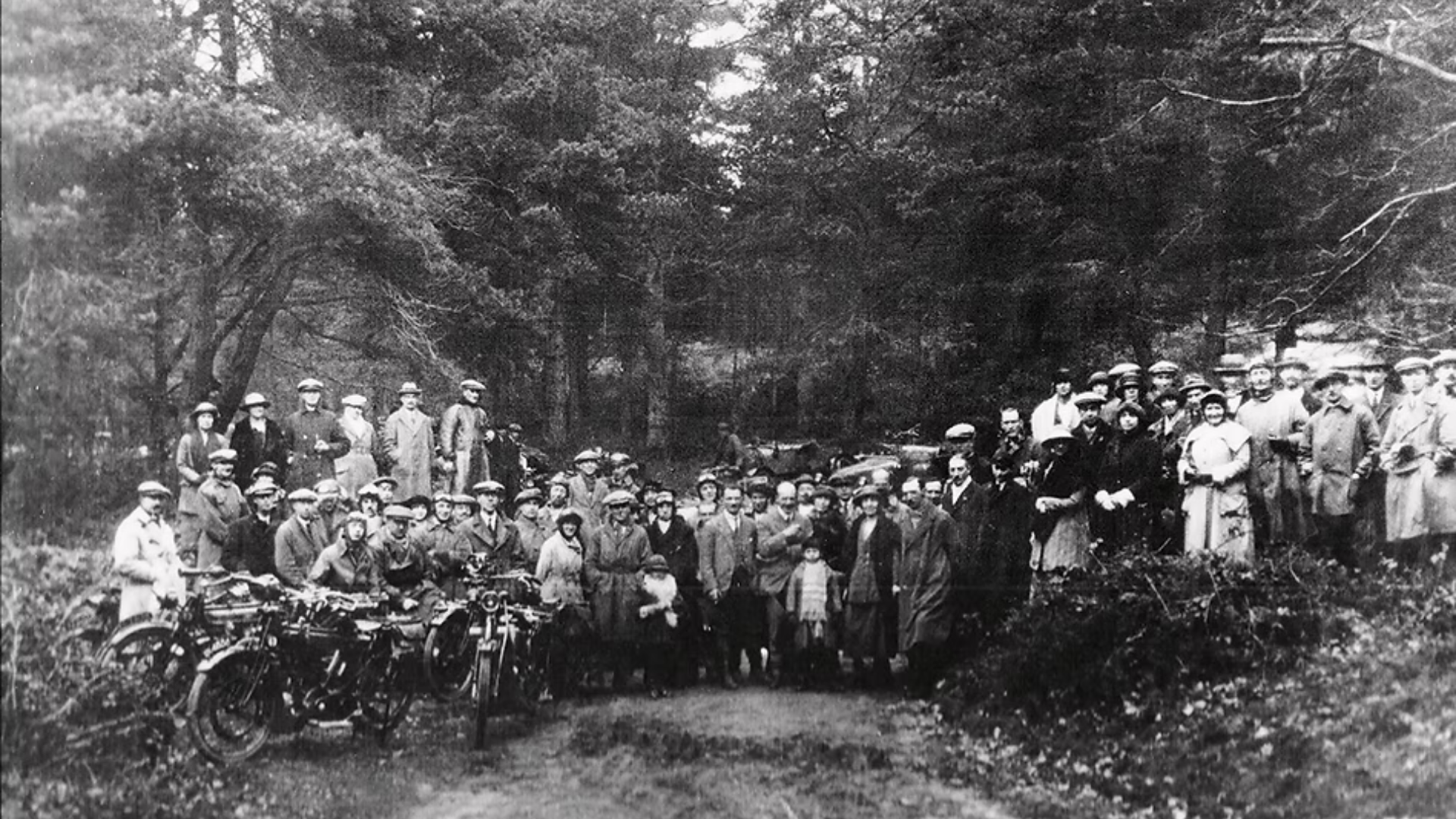 First CMSA Club Run, 1923. Source: Boundless
Conceived by proto-petrol head and civil servant Frank Vernon Edwards, Frank originally formed the club in 1923 to organise group motoring and social events – from annual dinners to motor tours of the Alps. And as early members set off on wheeled adventures together, they enjoyed cheaper motoring insurance via friend and CSMA partner Tom Frizzell, as well as saving a few quid on bulk-bought petrol and other essentials.
Fast forward to today and the offering isn’t all that different. Even down to Boundless’ partnership with LV= insurance, who later acquired the Frizzell Group.
“We think that founding mission is as relevant as ever,” says Darren. “The format is the same: we get friends and families together to have a nice adventure at the weekend. And we can save them money because we’re utilising our buying power. It’s changed shape a little bit, but those fundamental principles are the same now.”
that founding mission is as relevant as ever
The hard work really began with figuring out how to translate that mission into a product offering that would resonate with today’s target market. The answer, of course, would come from consumer research.
The spark that drove strategy
Boundless surveyed members and non-members and funnelled those insights through the lens of Jobs-to-Be-Done thinking, taught on the MiniMBA in Marketing: What job do customers ‘hire’ this product to do?
Next, they internally workshopped those findings using a Customer Value Proposition Canvas. “Why do we think people enter this category? What are they trying to get done? What are the alternatives? What are they thinking at the time? What have they been doing beforehand to trigger them into thinking of us?”
This process is where a theme of “switching off from work” began to surface, says Darren.
“We thought there might be something in it. It was something someone had said in our research that stuck: ‘I’m working from home and I just want to switch off from work and go somewhere else.’ So, we explored that a bit more and then put it into quant.”
It was something someone had said in our research that stuck…
That spark of inspiration is now a key part of their consumer perception tracking: ‘Does Boundless allow me to switch off from work?’ And, as you’ll see later, informed their IPA Award-winning ‘Time for Fun’ campaign.
“We had to ring fence this within our brand philosophy as well,” says Darren. “After we’d done the DNA bit and worked out what we were, the question became: what do we need to do to the product within these parameters; that will still mean we’re about free time and good times and all that stuff?
“We started to realise it was about access. People wanted free access, they didn’t want just discounts. If they’re paying a membership fee, they want to be able to get in places for free.”
Using all the leverage they had: their scale, closed network, not-for-profit for-public-sector status, their 100-year heritage; Boundless went away and negotiated great deals with some high-profile attractions.
Now on top of savings and events, Boundless members could get unlimited free family access to some of the biggest ‘day off’ destinations across the UK. Bought independently, annual membership to some of these attractions alone cost more than joining Boundless – which starts at £40 a year, with a Boundless Plus option available at £68.
We had to go back to value creation, which is what we’re here for
“It’s very hard to find these types of arrangements anywhere else. We invested a lot of money into it and so we had to get that agreement from the board. We had to show what that might look like in five years, when we’d see a return on investment.
“That was the biggie that we had never done before – we had to invest heavily in the product to make it valuable to our members. We would invest in other things, but we could not afford to neglect the product anymore.
“We had to go back to value creation, which is what we’re here for. My pitch to the board was: How can we take £1 of our members’ money and turn it into £100 worth of value for them?”
Creating value, not just customers
When Boundless launched the new and improved product, new member sales went through the roof. But once they had those members, Boundless wanted to keep them. That value creation promise is central to the whole Boundless operation.
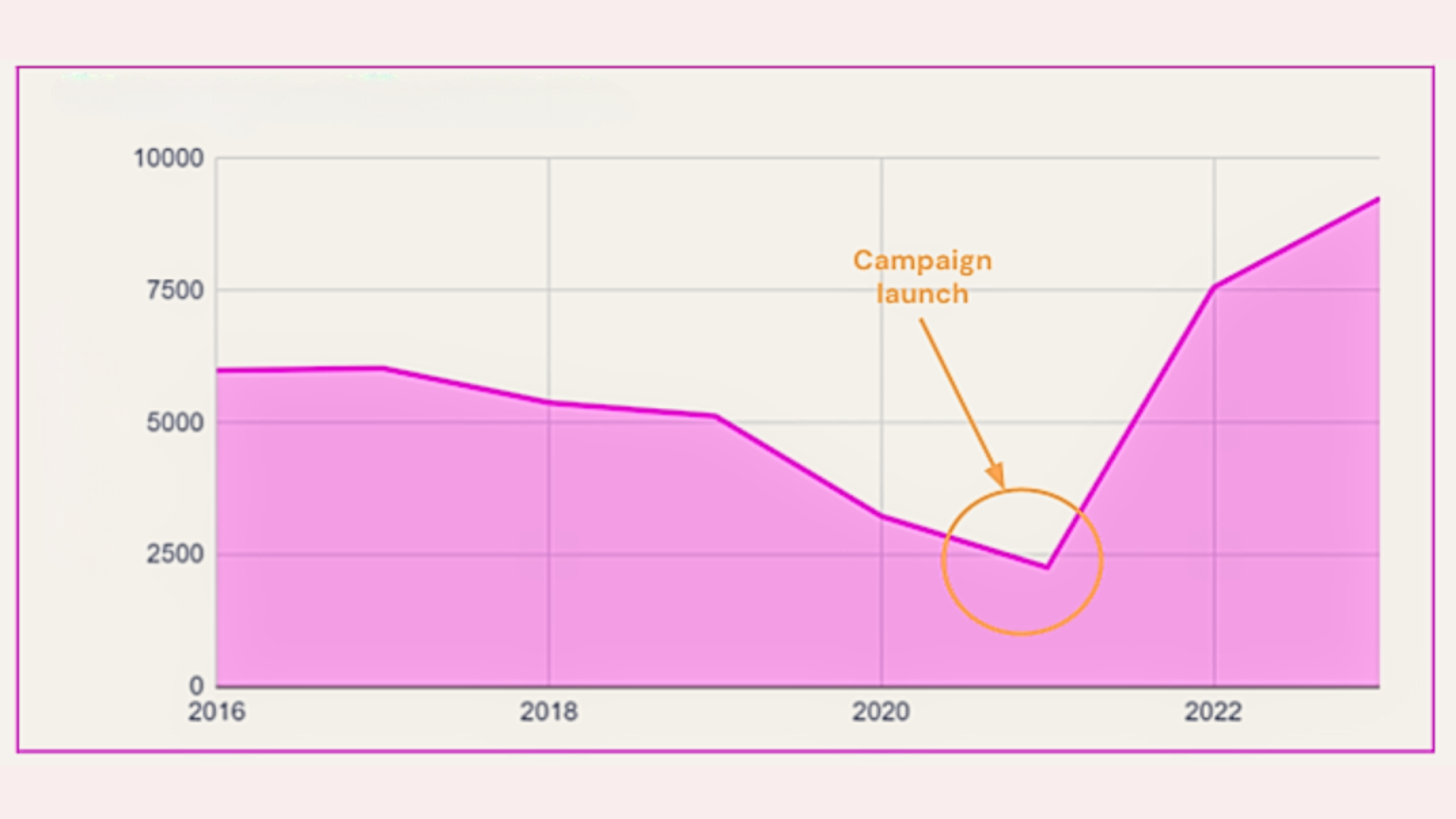
As a not-for-profit, there’s no shareholders or investors – Boundless exists purely to serve its members. That means every new subscription goes towards creating a better product for everyone.
Free access became the main reason people joined, says Darren, but there is a whole world of benefits beyond free entry and discounts that allow members to switch off from work and enjoy free time with their loved ones. There is a bustling volunteer network, packed calendar of events, a magazine, as well as Boundless-owned holiday parks and a hotel.
“We went through all the different parts of our proposition and tried to create as much value as we could,” says Darren.
“For example, we were getting feedback like ‘I don’t feel special when I go to a Boundless holiday property’ So, we made sure members get a better experience at those places – late check out and early check in, free parking, free spa day…”
These wider product improvements contributed to a +42% increase in year one retention and +375% growth in benefit usage across the board.
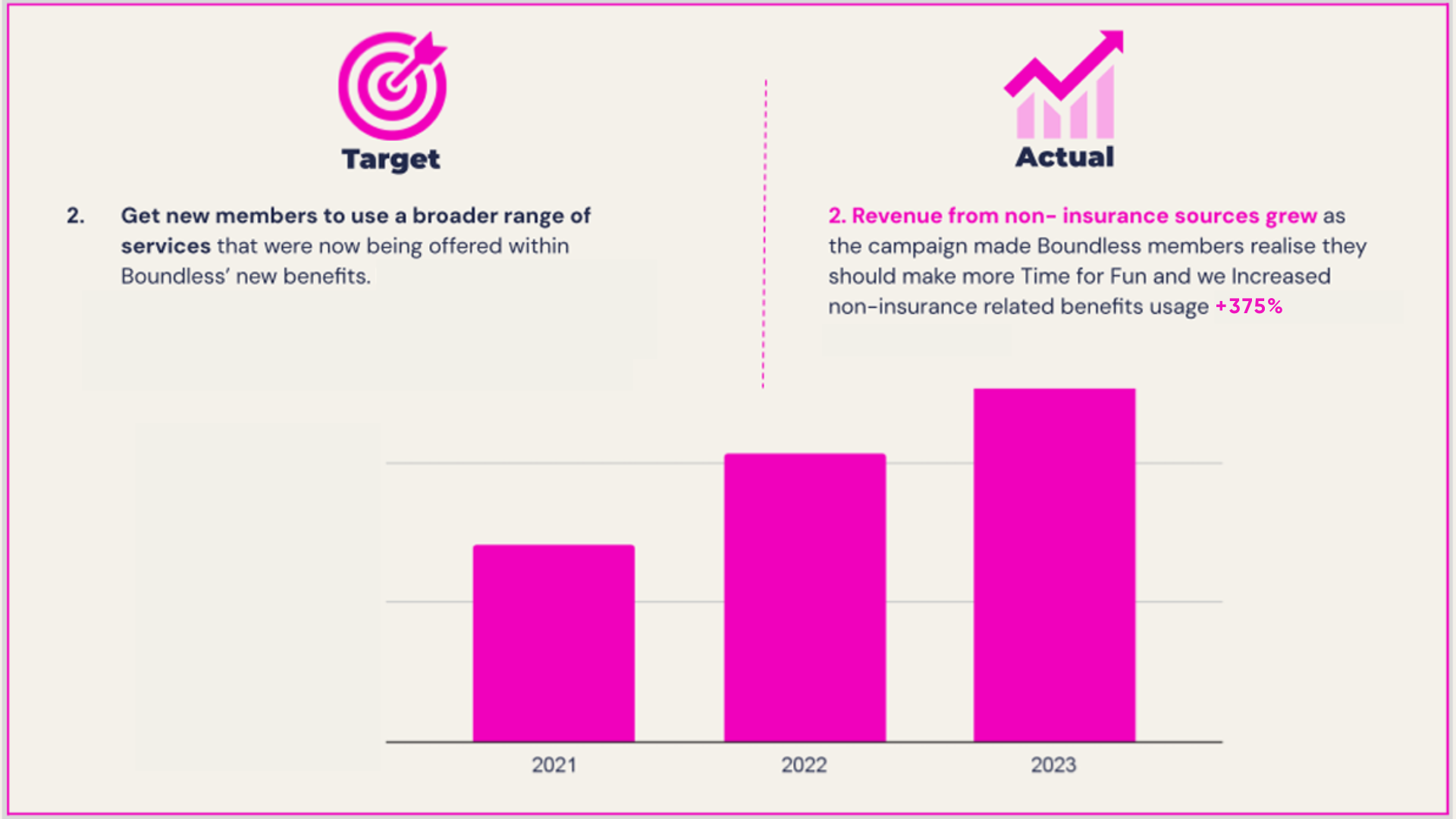 Source: Boundless and Anything Is Possible
As Darren has said, he and his team are not done yet. They will continue to evolve product and the other Ps to better serve their membership base.
“We talk a lot about how execution helps shape strategy. You learn from it and it shapes where you go next,” he says.
“To keep us on track, we now survey every member as soon as they’ve joined to capture their immediate thoughts. We ask what their main reason was for joining and we leave it as a free text.
“For some, it’s ‘I want to save money on days out’ and other people will say, ‘I want to be a better dad.’ It’s lovely rich stuff.
People will say, ‘I want to be a better dad.’ It’s lovely rich stuff
“It’s the functional and the emotional stuff. And we can start to feed that into how we present the product back to people. Because it’s not just about saving a few quid, it’s about creating tomorrow’s nostalgia. You know, those things we did when we were kids. Days out with our parents or grandparents…
“That’s what shapes us. We don’t get too worthy about it, but there’s definitely a nice thread of emotion running through it all.”
As Boundless work through their next stage of marketing transformation, they are adopting the MiniMBA approach Mark Ritson calls ‘turning the wheel.’
While the bigger strategic work of marketing is conveniently split into a cycle of diagnosis, strategy and tactical execution; the reality is that once those elements are in play, there will be some back and forth – especially when it comes to product improvement:
If we have an idea, which our data suggests is a good idea, we should get it into market and test it out among some users. We can then bring those insights back into the business, learn from them, tweak our product and get it back out into the market. Then we keep turning the wheel between company and consumer to continually augment our product as we move forward.
I’m trying to get stuff into market quicker
“Before, we were a bit heavyweight on the research front and we weren’t iterating quick enough. So, one of the things I’m trying to do is get stuff into market quicker, get feedback quicker and then try and shape it and shift it. That’s what we’re moving towards now.
“Our conversion rates over the last six months have increased significantly because of that obsession with looking at data and asking ourselves: what can we try? What can we learn?
“Loads of stuff doesn’t work, but then something breaks through and all of a sudden you’ve raised the bar.”
Next, we talk to Darren about the Promotional P – and the award-winning 'Time for Fun' campaign. Read part two now: "How one CMO used MiniMBA to win an IPA Effectiveness Award"
Interested in MiniMBA team training? Join leading global businesses like Google, Adidas, the BBC and Yakult. Contact our training team to find out more.
Cover: Mercedes Fittipaldi/alamy.co