
Think of Mark as your marketing agony aunt, as long as you don’t mind straight-talking, no-nonsense advice with very little compassion or empathy.
From the buzz of Super Bowl advertising to Mark Ritson and Andrew Tindall giving away free pints of Guinness (yes you heard that right), it’s been an exciting month to be a marketer.
So sit down, grab a cuppa and catch up on all things Mark in your bi-weekly 5-minute Mark Ritson round up.
The Drum: Has Pepsi reignited the taste test or spent $8m advertising Coke?
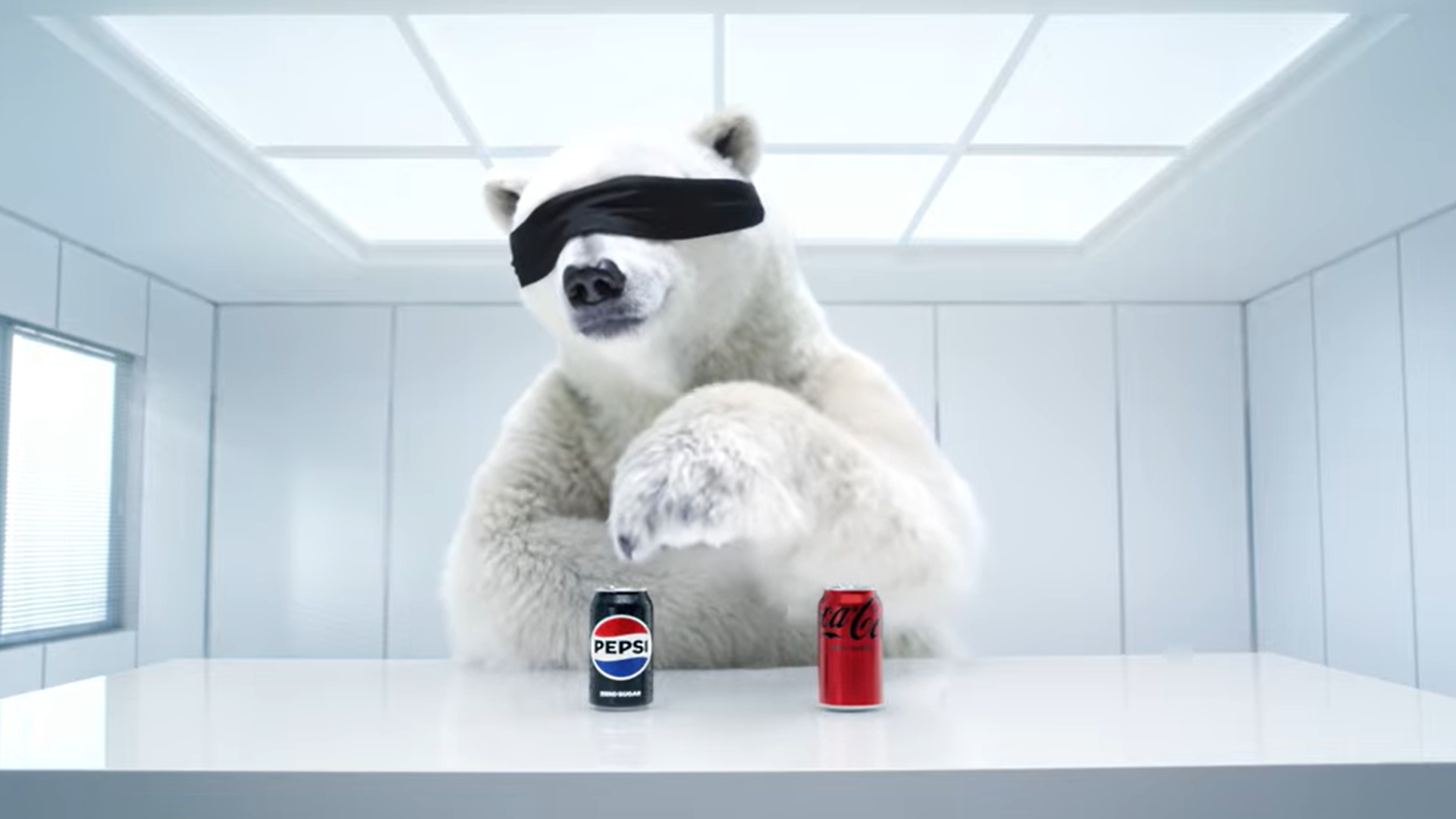
Pepsi’s Super Bowl LX ad has our professor in two minds. The 45-second spot features the iconic Coca Cola polar bear in a blind taste test between the two soft drink rivals, with the bear inevitably choosing Pepsi.
Is this a stroke of genius by Pepsi or a dumb (and expensive) mistake? “Exposing millions of Super Bowl viewers to a polar bear drinking a cola could generate as many Coke associations as Pepsi ones. Perhaps more.”
Pepsi used blind taste tests in ‘The Pepsi Challenge’, a marketing campaign that started in US shopping malls in 1975 and helped them narrow the gap with Coke throughout the 70s and 80s. It was the very essence of differentiation: "find a meaningful point of difference (the taste), dramatize it compellingly, then invest heavily in the message and watch market share follow.”
However, in using the polar bear, one of Coca Cola’s most distinctive brand assets, Pepsi has created a standoff between differentiation and distinctiveness. Will consumers resonate with the differentiation (the better taste), or is a polar bear holding a soft drink so deeply burned into customer memory that they can’t help but think of Coca Cola?
Who is going to win? Who is going to achieve the most recall? It might be hard to tell. “Despite the industry hullabaloo around Super Bowl advertising, its lasting impact is remarkably piss-poor. Ipsos has observed that more than half of Super Bowl ads achieve less than 1% brand recall the morning after the game.”
What we do know is that if Coke achieves any significant brand recall from an $8 Million ad it didn’t pay for, they win.
The debate between distinctiveness and differentiation is not a new one. Mark Ritson claims you need both, which he calls the ‘Double D’ approach to positioning. And that’s what he teaches on the MiniMBA in Marketing.
ADWEEK: Flag on the Play: How the Super Bowl Breaks All the Advertising Rules

Sticking with the Super Bowl, this year’s ad slots sold out five months early, the fastest sellout in Super Bowl history. Not only were they the fastest selling in history, NBC also comfortably sold the ad slots with a pretty price tag. The most expensive 30-second slot costing up to $10 Million.
Yet, amongst the hysteria that surrounds the Super Bowl, there are some obvious contradictions. For one, it goes against everything we know about modern advertising.
Think you need personalised, segmented advertising? Think again. “Super Bowl ads are the definition of mass marketing: 127 million people, no targeting, no segmentation, no first-party data enrichment. Just a single creative bet placed in front of half the eyeballs in America.”
Think TV is dead and individual consuming rules? Wrong again. Super Bowl advertising is traditional TV in its purest form. The apogee of event-based ‘togetherness’ television watching.
Think optimisation and performance are king? Noone cares about that during the Super Bowl. Emotion and creativity take precedence. “Super Bowl ads trade almost entirely in emotion: humour, nostalgia, inspiration, spectacle.”
Think short-form is the only way to get your audience to engage? Not this time. Brands are paying through the Levi's Stadium roof for 60, 90, and even 150-second ad slots.
“Every Super Bowl exposes the gap between what the marketing industry claims to believe and what actually works. Mass reach is not a relic. Television is not dead. Creative is not secondary. Emotion is not inefficient. And the Super Bowl is no anachronism. It’s a wake-up call.”
Outside of the Super Bowl, effectiveness is still king. Recently, we reached out to the Brand Management Consultant at Rangemaster to learn how they used the core lessons of Brand Management in their latest TV ad. Read: "The MiniMBA frameworks behind Rangemaster’s brilliant new ad"
The Drum: The Great Stay and the quiet collapse of the marketing job market

The Great Stay is here. Not to be mistaken for the Great Resignation of 2021, the Great Stay is much bleaker.
Research found job postings and openings fell by 8% on average across the UK and US. A lack of mobility in the job market also means salaries take a hit. UK salaries grew 3% in 2025, down from the 6% average. In the US, marketing salaries actually fell by 3%.
Why is the job market so terrifying I hear you cry? The economy is doing okay; GDP is positive, inflation is moderate, company earnings are stable and consumer spending hasn’t tanked.
In comes the villain of this story: AI. “HubSpot reports that 74% of marketing professionals already use AI day-to-day, and a CMO survey by the Wall Street Journal found more than one-third expect to cut staff over the next one to two years.”
The sad truth is that as AI continues to play a bigger role in marketing, we need fewer human marketers. So, according to Mark, here’s what you should do if you’re sitting inside this blackhole of a market.
First, don’t make any sudden movements. “The grass is not greener. It is increasingly artificial turf. The job-switching salary premium has halved from 8% in early 2023 to just 4% in 2025.”
Second, being a generalist may work in your favour. Companies want marketers who can understand strategy, brand and comms, and work across a range of marketing tasks.
Third, get good at using AI. “The marketers who will thrive can use AI to multiply their output and make a team of three perform like a team of eight. But – and this is key – don’t bang on about it. Just use it. We will soon wince at how often we invoked the term “AI” to describe perfectly normal work. It’s just the process now.”
Forth, build skills AI cannot replace like leadership, negotiation and relationships. “The ability to sit in front of a CEO and make the case for a brand investment that won’t pay back for three years. The ability to say no to a bad idea when the algorithm says yes.”
–
The MiniMBA in Management follows the same structure as our flagship courses, but focuses on developing boardroom skills like leadership, negotiation, and decision analysis. It kicks off on 20 April and will give you the confidence to excel in more senior roles. Book your place here.
ADWEEK: Starbucks Chief Brian Niccol Might Just Be the Best CEO in America
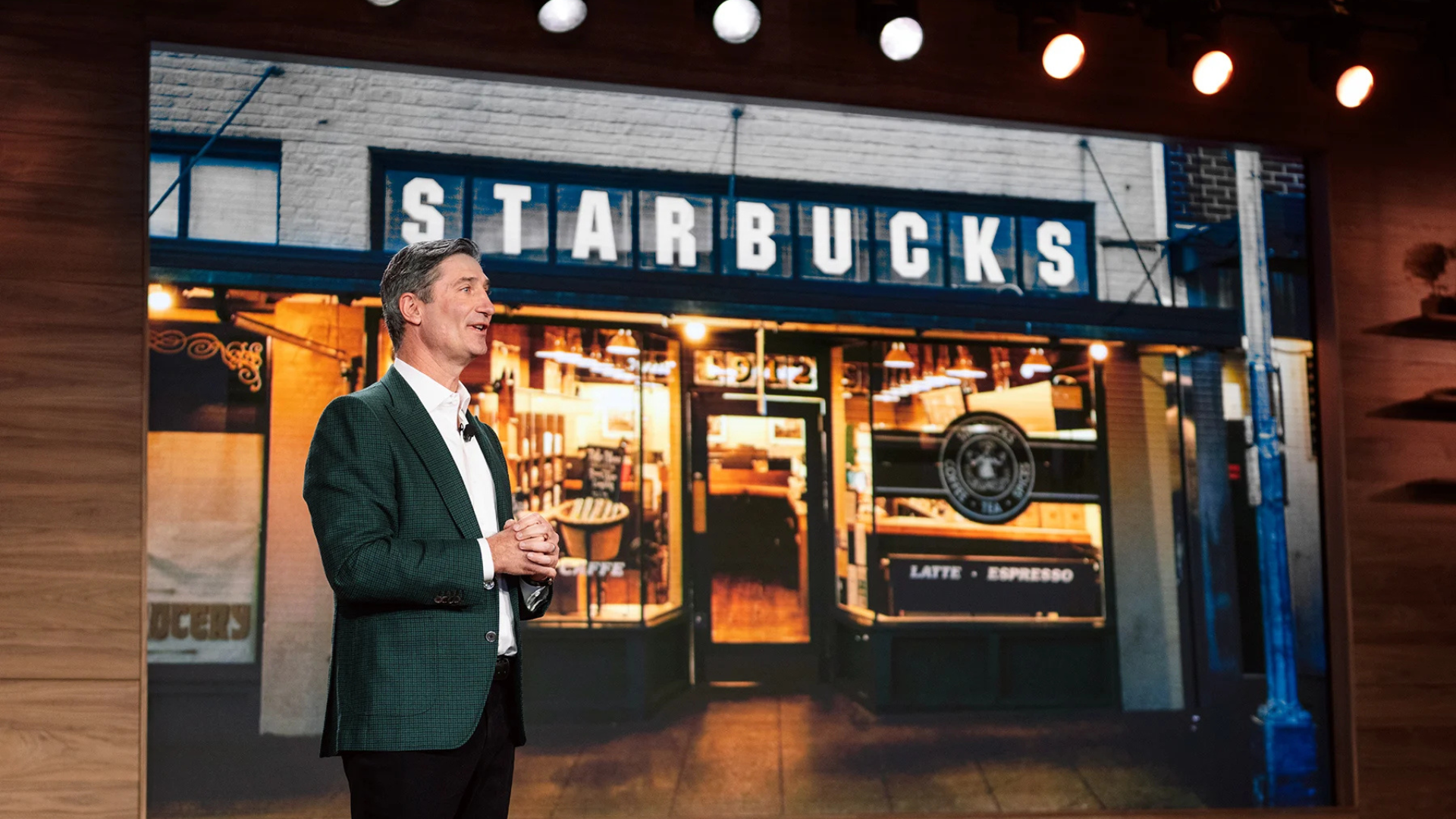
Coming from Taco Bell and Chipotle, Brian Niccol joined Starbucks as the CEO back in 2024. It’s fair to say he didn’t get off to a swimming start.
“First, there was the messy scrap about wanting to work from home while leading a company insisting its managers return to the office.” Second, his 4-month salary of $96 Million, 6,666 times more than the average barista, was hard to ignore.
But the tide is changing. Niccol has since made some moves in the right direction for Starbucks. Let’s unpack the beans.
Niccol’s first smart move was bringing good people in. He hired Tressie Lieberman from Chipotle as Chief Brand Officer, Cathy Smith from Target as the CFO, and installed new leadership across all his stores.
The next point on his agenda was the brand’s position. Its old mission statement was vague, overwritten and suggested someone in the senior team had lost their strategic way. “With every cup, with every conversation, with every community—we nurture the limitless possibilities of human connection.”
Versus its new position: “A welcoming coffeehouse where people gather, and where we serve the finest coffee, handcrafted by our skilled baristas.”
A tighter position also brought simplification in the brand’s processes. Niccol cut 30% of the menu, brought back handwritten names on cups, removed the extra charge for non-dairy milk, removed all price promotions and shifted spend toward brand experience. “Classic brand building: Stop bribing customers and start reminding them why they love you instead.”
“Then came Green Apron Service—the largest operating standards investment in Starbucks’ 54-year history. The $500 million program is built around five customer moments: greeting, glassware, a message on the cup, connection at handoff, and a clean café.”
The numbers are beginning to reflect these changes. Revenue is up 6%, loyalty and non-member visits grew for the first time since early 2022, and shareholder value has increased by roughly $18 Billion.
“For once, the big salary is justified.”
–
When it comes to a brand’s position, tightness and simplicity is everything. Learn how to effectively position your brand, and articulate it to your customers, in Module 5: Brand Positioning of the MiniMBA in Brand Management.
Images (from top): Mark Ritson photoshoot (cough OpenAI cough), Pepsi, Maxgor/Adobe Stock, Starbucks